Data Sovereignty Is Not Optional: Protecting Canada’s Digital Future
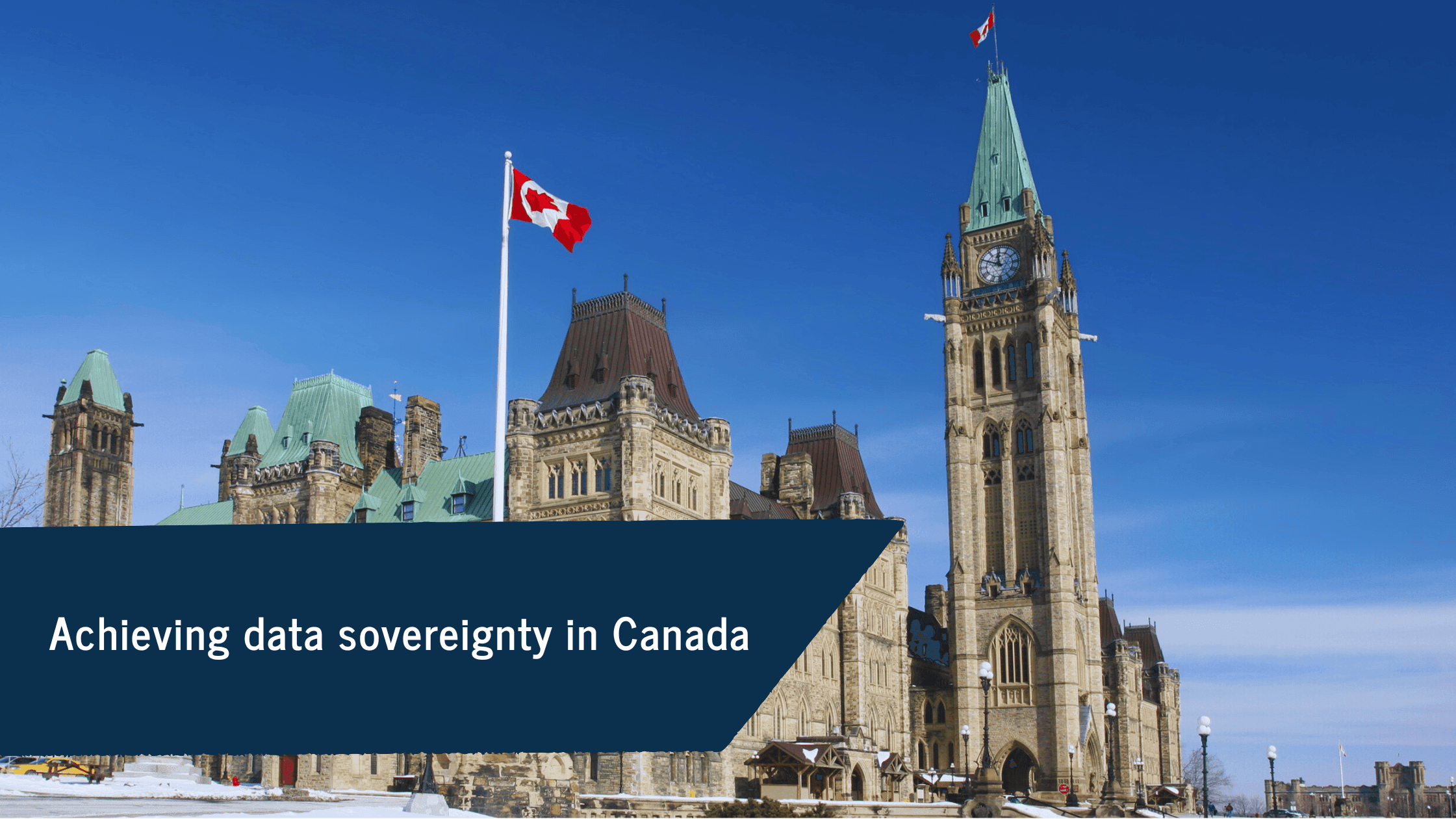
Canada is approaching a defining moment in how we protect our data, our infrastructure, and ultimately our national autonomy.
For years, convenience has quietly outranked control. Organizations adopted cloud platforms without always asking where their data resides, who can access it, or under which jurisdiction it ultimately falls. Consumers accepted terms of service without realizing that their personal information could be replicated across borders within seconds.
Today, that tradeoff no longer holds.
In an increasingly unstable geopolitical climate, data is not just a technical asset. It is an economic resource, a security priority, and a matter of public trust.
The question Canadian organizations must now ask is simple: Who truly controls our data?
The Illusion of Control
Many Canadian businesses believe their data is protected simply because their provider operates in Canada or offers a Canadian region. Unfortunately, geography alone does not guarantee sovereignty.
Under legislation such as the U.S. CLOUD Act, American authorities can compel U.S.-based technology companies to provide access to data, regardless of where that data is physically stored. This means a Canadian company hosting sensitive client information on a platform owned by a foreign entity may still be subject to external jurisdiction.
Most executives do not discover this risk until a procurement review, a regulatory audit, or a customer asks a difficult question.
By then, the exposure already exists.
When Data Leaves Canada, So Does Control
Consider the sectors that form the backbone of our economy:
• Healthcare providers managing patient records
• Financial institutions safeguarding transaction data
• Public sector organizations holding citizen information
• Technology firms building applications that capture behavioral and biometric insights
If this data is processed, mirrored, or analyzed outside Canada, the chain of custody becomes harder to defend and nearly impossible to explain to stakeholders.
Reputation is built over decades and lost in hours. A single privacy failure can permanently alter how customers, partners, and regulators perceive an organization.
Trust is no longer earned through branding alone. It is earned through architecture.
The Hidden Cost of Third Party Dependency
Many modern software platforms rely on complex subprocessor ecosystems. A single application can involve dozens of vendors quietly exchanging telemetry, usage patterns, identity data, and metadata.
Often, this sharing is technically permitted within lengthy contractual language. Rarely is it understood.
Organizations must recognize a difficult truth: if you do not know exactly where your data flows, you do not control it.
This is not about rejecting global innovation. Canada benefits from international collaboration. But blind dependency introduces systemic risk, particularly when data becomes concentrated within a small number of foreign hyperscalers.
Digital resilience requires intentional design.
Privacy Must Become Infrastructure
Privacy cannot remain a compliance checkbox or a legal afterthought. It must be engineered into the foundation of the systems we build.
This means:
Designing applications that minimize data collection Collect only what is necessary. Excess data is excess liability.
Prioritizing Canadian hosting and jurisdictional clarity Know precisely which laws govern your data.
Reducing reliance on opaque third party processors Transparency must extend beyond your primary vendor.
Implementing privacy-first identity frameworks Verify users without harvesting unnecessary personal information.
Building environments that assume scrutiny
If you had to explain your data architecture on the front page of a national newspaper, would you be comfortable doing so?
Responsible organizations are already shifting in this direction. Not because regulation forces them to, but because leadership demands it.
A National Opportunity
Canada has the talent, the regulatory maturity, and the technical capability to lead in privacy-first infrastructure.
But leadership requires conviction.
Choosing sovereign architecture is not the easiest path. It demands stronger governance, deeper technical evaluation, and occasionally the courage to walk away from convenient defaults.
Yet the upside is significant.
Organizations that invest now will differentiate themselves in a market increasingly defined by trust. Customers are becoming more aware of how their information is used. Governments are tightening expectations. Enterprise buyers are scrutinizing vendors with new intensity.
Privacy is rapidly becoming a competitive advantage.
Soon, it will simply be the price of entry.
The Risk of Waiting
History tends to judge organizations less by the threats they faced and more by the warnings they ignored.
The question is no longer whether data sovereignty matters. The question is which organizations will act before they are forced to.
Canadian businesses must decide:
Will we build systems worthy of the trust placed in us?
Or will we continue exporting control of our most valuable digital assets?
Data sovereignty is not about isolation. It is about stewardship.
It is about ensuring that Canadian data is governed according to Canadian values.
And above all, it is about recognizing that privacy is not a luxury reserved for highly regulated sectors. It is a responsibility shared by every organization that touches human data.
Continuing the Conversation
The path forward requires collaboration between technology leaders, policymakers, and operators across industries.
To support this dialogue, we will be hosting a panel discussion focused on the real-world risks of data exposure, evolving oversight expectations, and the architectural decisions organizations must make today to remain resilient tomorrow.
For leaders who recognize that the future of trust is being built right now, this conversation is not optional. (see information below)
It is overdue.
***
PANEL INFORMATION:
Title: Data Sovereignty in Canada: Control, Risk, and the Future of Trust
Description: A leadership panel for leaders navigating privacy, infrastructure, and national data control.
Date: Wednesday, February 25 at 12:30pm - EST
Registration: To receive a registration link for this panel or to participate, please email: virginia.wilson@petrichorlabs.ca
PANEL DESCRIPTION:
Canada is entering a critical phase in how personal, corporate, and public-sector data is governed. As geopolitical pressure increases and regulatory expectations evolve, organizations can no longer afford ambiguity around where their data resides, who can access it, and which jurisdictions ultimately control it.
Data sovereignty has moved beyond a technical discussion. It is now a board-level priority tied directly to operational resilience, national security, customer trust, and long-term enterprise value.
This executive panel brings together leaders in privacy engineering, cybersecurity, infrastructure, governance, and risk to examine the realities Canadian organizations face today. The conversation will move past theory and into practical oversight, architectural responsibility, and the decisions leadership teams must make to reduce exposure.
Panelists will address:
• The real implications of hosting data outside Canada
• Jurisdictional risk and foreign access laws
• Third-party dependency and hidden data flows
• Privacy-first infrastructure and responsible system design
• Oversight expectations from regulators, partners, and customers
• How forward-looking organizations are strengthening control
This discussion is intended for executives, technology leaders, risk owners, policymakers, and operators responsible for protecting sensitive information and guiding their organizations through an increasingly complex digital landscape.
The objective is not alarmism. It is clarity. Organizations that act early will define the standard for trust in Canada’s digital economy.